
Emotions Don’t Work The Way We Think They Do, and The Implications Are… Weird

The History of Getting Mad About Getting Mad: Are We Mad Because We Feel Mad, or Do We Feel Mad Because We’re Mad? Either Way, I’ve Been Driven Mad. Send Help.
It feels like common sense that our feelings are feelings because of what we feel, not because of what we feel. …Sorry, that didn’t make any sense at all. Let me try again.
It seems like common sense that the emotional states we experience, like anger, sadness, and joy, are the end results of our thought processes, and that they’re not caused by the physiological, bodily sensations that we usually associate with these emotional states. You don’t get sad because you’ve spontaneously started crying – you start crying because you’re sad, right? Well, two men across the world from each other in the late eighteen hundreds independently suggested that everyone who has ever lived is completely wrong and that human subjective experience in no way matches reality. They claimed, somehow, that we actually do cry first and then get sad only because we’re crying. You’d think an idea as apparently dumb as this would be easy to disprove, but it’s been one hundred forty-one years and we’re still secretly drugging men, tricking test subjects into getting overly aroused, and lobotomizing cats about it. Psychologists, philosophers, neuroscientists, and physicians have created some very entertaining evidence both for and against the James-Lange theory of emotion, and as you may have just figured out, this evidence is far more interesting than the actual truth, which, again, we haven’t even agreed on yet.
The Conflict Immediately Escalates: The Rise of Lobotomy Cat
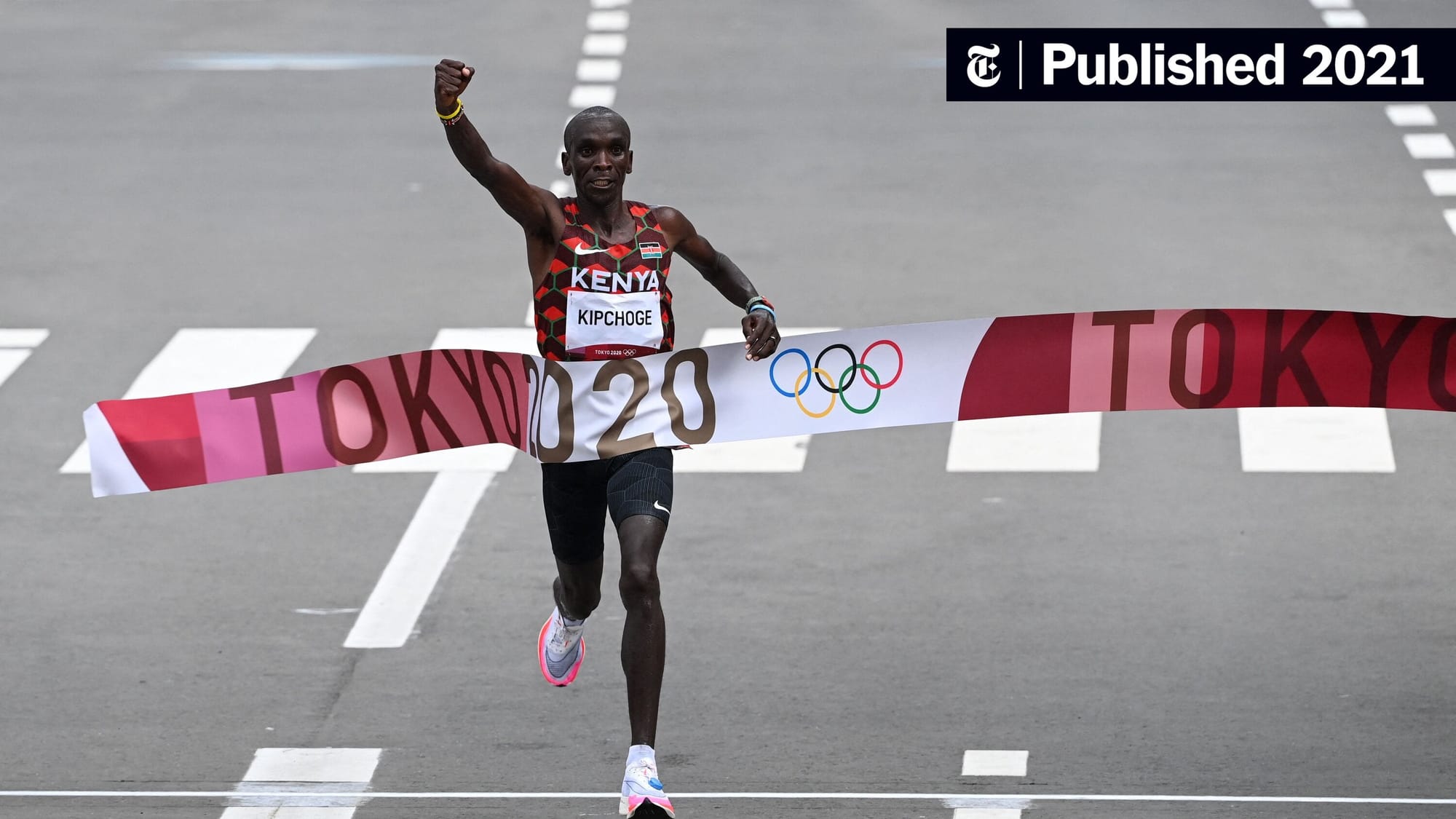
The first interesting developments in this psychological meta-warfare emerged as reactionary theories to James-Lange. People hated James-Lange. I mean, look at it. According to the theory, inside the mind of every marathon runner should be the worst panic attack of their entire lives. A marathon makes you sweat buckets, shakes your heart out of its frame, and has you hyperventilating like you’re frantically searching for a paper bag to breathe into. And you’re doing this for hours. Physiologically, that’s a textbook panic episode (assuming you’re using the James-Lange textbook, of course). This is more or less the primary anti-JL argument that everyone returns to. Emotions share overlapping physical attributes. Your heart can race from either fear or excitement. You can cry from either misery or joy. Unless there’s some sort of mechanism in place to more carefully judge what’s going on from environmental context (like human consciousness evaluating the situation and then making you mentally feel some sort of way about it!), then the theory has a gaping hole.
In the nineteen twenties, A physiologist and his graduate student teamed up both to provide a more reasonable alternative to James-Lange and also to produce a much cooler hyphenated theory name: The Cannon-Bard theory. Cannon and Bard argued that instead of emotional events causing a physical sensation which then causes a mental emotion, emotional events cause signals to be simultaneously routed to both the body’s physiological control center and the conscious brain, resulting in you beginning to cry and feeling sad not because either caused the other, but because your body and mind can independently find things sad. And honestly, unlike with the JL theory, I can’t immediately disprove that using my own personal experience. Temporally, those events are always pretty close together for me, but maybe I’m just a quick crier. Either way, how do you prove this as a scientist in the roaring twenties? It’s simple: You find a band saw, an ice cream scooper, and a cat you snatched off the street.
Step 1: Using the saw, give the cat a nice haircut. “A little off the top” is perfect, as long as you interpret that to mean removing the scalp.
Step 2: Pick up your ice cream scooper, and just pretend it’s all mint chocolate chip. Ideally, you will have removed most of the pink while keeping the cat alive. If unsuccessful, buy more cat food and get back on the street.
Step 3. Now that you’ve performed what can only be described as a “super-lobotomy,” (as a reminder, this is the very first step anyone ever took to try to disprove James-Lange; what the hell happened here), irritate your lobotomy cat. This is easy, because lobotomy cats are always irritated. Even just touching them causes them to hiss and claw like they’re aiming to take your eye out.
But here’s the thing: among all that mint chocolate chip ice cream was the part of the cat responsible for its ability to feel irritation and anger. Somehow, the cat is still clearly feeling nonplussed despite its inability to evaluate the environment, assess that it’s had all of its higher brain functions destroyed and removed, and its inability to feel existential anguish at the observation of the shell of itself to which it’s been reduced. But it’s still mad. Well, its body is, even though most of its brain is busy being next to it in a jar. Cannon and Bard suggested that this is because the part of your brain responsible for deciding what emotion you feel isn’t the same as the part that feels it. Instead, that lower-level area (which still remains active in lobotomy cat) makes the decision and sends the result to the body and upper brain at the same time.

The Conflict Moves Away From Lobotomies and Toward the CIA’s Torture Tactics
The next shot fired in the war between the physiological-emotion-and-lame-hyphenation camp and the cognitive-emotion-and-cool-hyphenation collective was by Schachter and Singer, who promptly hyphenated their names (seriously – why do they keep doing that?) and entered the lame-name group to argue in favor of your body dictating your emotions. Given that the 1800s and 1900s are what psychologists lovingly look back on as “The Golden Age of ‘Ethical’ Experimentation” (“Yeah man, lend your little baby Albert to John B. Watson – what’s the worst that could happen? Wait, he did what to his own kids?”), Schachter-Singer decided the best way to verify their ideas was to secretly dose men with adrenaline injections and then try to make them mad. The results were actually quite interesting.
First of all, yes, if you secretly use a chemical to make someone’s heart beat really fast without them knowing they’ve been drugged and then try to make them mad, they do indeed get very mad. But if you tell them you’re giving them adrenaline, and that it’ll make their heart beat faster, the things that pissed off the MK ULTRA victims barely leave a dent in the consenting and aware men’s emotional states. And if you don’t inject them with anything at all (John B. Watson could never) they don’t get mad either. So what’s going on here? Schachter and Singer argued that even though it’s hard to prove that physiological sensations cause emotions, they definitely still have a strong influence on the emotional intensity. Their attempts to piss off their test subjects were actually fairly weak – but if your body is already experiencing the “consequences” of anger (high heart rate, perspiration, jitteriness, etc.) your mind reinterprets the angering stimulus as stronger than initially thought, and it adjusts your level of anger to compensate for that. Importantly, you have to believe that the anger your body is experiencing is from the same source as your mental anger, otherwise your mind won’t link the two together and amplify the emotion you feel; that’s why the consenting adrenaline junkies didn’t get mad: they knew that they were shaking because they were drugged, not because they were upset. The others didn’t, and they got upset. From this perspective, it does appear that your physical body in a way has control over your mental emotions.
You can use this bodily control over mental state to induce some wild effects, by the way. In 1974, researchers had participants walk onto a structurally unstable, potentially deadly bridge, and then they had an attractive woman interview them. Compared to the men whom she interviewed on solid ground, these men found their interviewer more attractive because their brains conflated the physiological fear response of being on a potentially deadly bridge with the sexual attraction and arousal of talking to an attractive woman. Their wires got crossed, and their brains thought they were sweating and had high heart rates because they were horny, so their brains made them even hornier. It sounds like brain-hacking, and it kind of is. That’s why the internet always tells you to take first dates to a theme park with rollercoasters. Your date’s body will misinterpret a rollercoaster being fun and exciting as you being fun and exciting, which only goes to show how powerful this phenomenon is.
“Law” and “Ethics” Forces Cooperation and Reconciliation
As we reach the new millennium we are now entering the age of oppression and ethics review boards. The shackles of “treating people like humans” now means we have to think a little more nuanced about how we study the field of physiological and mental emotional origin, which is fine, I guess. The modern, nuanced neuropsychologists spearheading unprecedented cooperation on this topic (they’re not even hyphenating anymore!) are Dr. Lisa Feldman Barrett and Dr. Anil Seth, and a very simplified run-through of their joint take is this:
First, we separate “emotional state” into two things: the emotion (the conscious anger you feel and how it affects the way you think, like making you more impulsive and prone to outbursts), and the feeling (the physical sensation of a faster heart rate and of perspiration, and how it reflects an altered physiology). So which causes which? Do you feel the emotion of anger because your body feels angry feelings? Or does your body feel angry feelings because you’re feeling the emotion of anger? Well, the former. And the latter. At the same time. And it depends.
The human brain keeps a constantly-updating model of itself and its surroundings, and it uses any information it receives to adjust that model as quickly and efficiently as possible. When applied to this particular aspect of cognition, it means that feelings and emotions actually actively modify each other. If you’re about to feel something emotional and your brain’s in a hurry, it’ll grab the quicker of the two (usually the physiological feeling, if the emotional state is being triggered by something primal and environmental) and work off that until it learns more about the situation. Let’s take our bridge brain-hacking example. A man stands on a bridge, and it’s tall and scary, and it’ll probably collapse soon. He hasn’t even consciously thought about it yet, but his body notices and sweats him up and brings on the heart palpitations. But then, the mental emotion comes into play and starts providing feedback to the physical feeling. In our man’s case, this usually comes in the form of the almost-conscious brain saying something like, “Wait a minute - this isn’t a scary bridge. It’s a hot lady!” Then the feelings change up how much he’s sweating, how fast his heart is pumping, and it adds a new variable – where all that blood is pumping to. But the mental emotions don’t have absolute authority over the physical feelings. The physiological processes are still there, saying, “Guys, this bridge is really high up, and I think I just saw that researcher take a cartoon saw to one of the cables… is that cat blood on it?!” Because of this, his sweat levels and heart rate are way higher than they would normally be, even while talking to an attractive woman, so his emotion takes that into consideration and thinks, “Damn. She must be fine as hell!”
This is a constant round-table discussion as a feedback loop racing across your brain and body, millisecond by millisecond, integrating numerous perceptual, interoceptive, and affective neural circuits; in essence, that’s what feeling an emotion is. However, why go to all this effort in order to make you feel upset that someone took your parking spot? Barrett and Seth suggest that it’s because processing emotions like this (predictively assessing mental emotion based on physical feeling, and then adjusting as more context is revealed) allows us to generate emotional cognition much faster than otherwise, because we don’t have to wait for a contextual emotion to fully resolve before feeling and acting on it. This is particularly helpful in situations like when you see a grizzly bear and start running for your life. No matter what, your first instinct is to be terrified and immediately leave the area. If it turns out that the “grizzly bear” is actually a large dog, there’s nothing stopping your terror from being adjusted into amusement, and your anxiety from being converted into excitement at seeing a very pettable dog. But if it is a bear? You’re already running, and you can keep running. If it does end up being a dog, though, I’d say I’d be happy about that, but I’m a James-Langer, and I just ran a marathon, so today might actually be the worst day of my life.
WORKS CITED
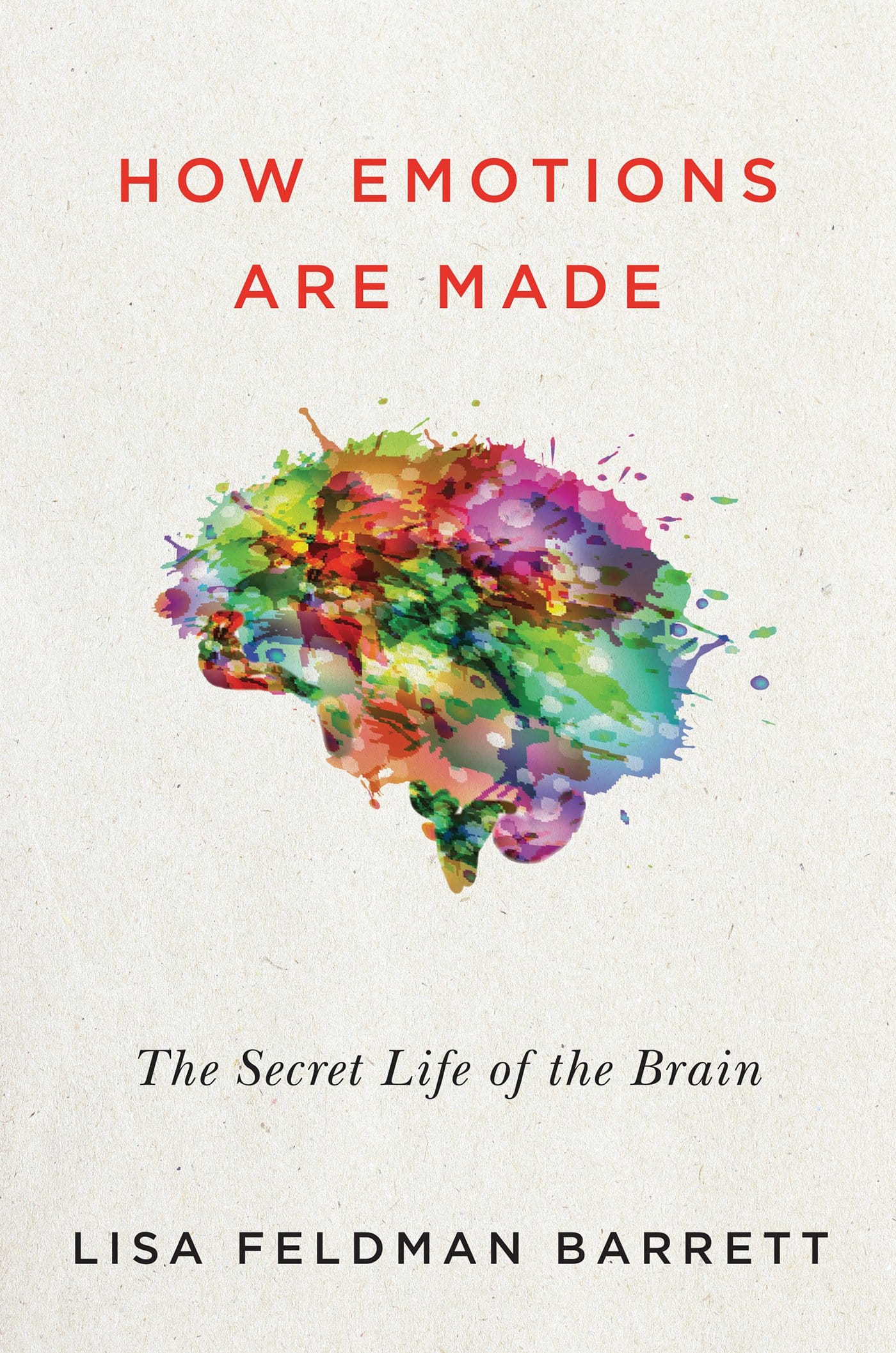
Barrett, L. F. (2017). How emotions are made: The secret life of the brain. https://www.amazon.com/How-Emotions-Are-Made-Secret/dp/0544133315
Cannon, W. B. (1927). The James-Lange Theory of Emotions: A Critical Examination and an Alternative Theory. The American Journal of Psychology, 39(1/4), 106–124. https://doi.org/10.2307/1415404
Dutton, D. G., & Aron, A. P. (1974). Some evidence for heightened sexual attraction under conditions of high anxiety. Journal of Personality and Social Psychology, 30(4), 510–517. https://doi.org/10.1037/h0037031
WILLIAM JAMES, II.—WHAT IS AN EMOTION ?, Mind, Volume os-IX, Issue 34, 1 April 1884, Pages 188–205, https://doi.org/10.1093/mind/os-IX.34.188
Schachter, S., & Singer, J. (1962). Cognitive, Social, and Physiological Determinants of Emotional State. Psychological Review, 69, 379.
https://doi.org/10.1037/h0046234
Seth, Anil K.Trends in Cognitive Sciences, Volume 17, Issue 11, 565 - 573
Strack, F.; Martin, L. L.; Stepper, S. (May 1988). "Inhibiting and facilitating conditions of the human smile: a nonobtrusive test of the facial feedback hypothesis". Journal of Personality and Social Psychology. 54 (5): 768–777. doi:10.1037/0022-3514.54.5.768.