
How to get high off your own emotions

Frisson (pronounced friss-in) is a word you might not have heard before, but it describes a sensation you definitely know. It’s the shiver that runs down your spine when a moving melody reaches its crescendo, and it's the way your whole body tingles when a poignant film brings you to tears. Biochemically, it’s healthy heroin. It’s exercise, chocolate, and sex. And yet, it’s not that common. We just don’t feel frisson as much as we might want to. Recent research has shed light on the biological mechanisms behind frisson, offering promising insights we can glean for our own benefit, allowing us to quite literally get high on our own emotions.
At its core, frisson is your body’s physical and psychological response to a sudden, intense shift in emotion triggered by emotionally charged media. Regardless of if you’ve shifted toward a positive emotion like joy, hope, or love, or to a negative emotion such as misery, suspense, or fear, a strong enough emotional change can set off frisson, and your body will react in the same positive and pleasurable manner. This is why sad songs and movies can feel so cathartic, and it’s why the horror film industry even exists; the suspense, fear, and jump scares in these movies are so effective at provoking frisson that the viewing experience becomes enjoyable instead of traumatic. Frisson’s ability to trigger even off of negative emotions stems from the unique interplay of neural circuitry behind the scenes.
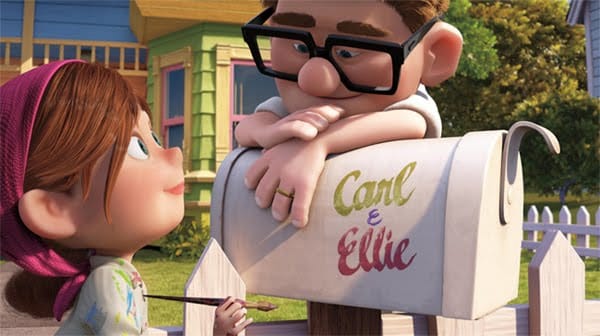
Frisson and its emotion-agnostic effect are driven by the simultaneous activation of two key neural circuits: the sympathetic nervous system, which is responsible for your fight-or-flight response, and the mesocorticolimbic circuit, your brain’s pleasure and reward center. What does this mean in a practical sense? When you experience frisson, your heart races, adrenaline surges, your skin tingles, and you like it – a lot. This is actually a natural high, aided by the significant release of endorphins, natural neurotransmitters that act quite similarly to opioid molecules. Even better yet, this particular combination of pleasure and stress hormones powerfully suppresses negative emotions and overrides them with a feeling of well-being1. This is what allows for frisson to activate from any type of emotion, but it doesn’t explain why it’s such a rare sensation.

The reason you don’t experience frisson as often as you might expect is because of an additional factor that influences how emotionally compelling a song or film needs to be: novelty. When you know in advance that a piece of media is about to shift in tone, your brain subconsciously braces for the change, dulling your emotional response. Novelty also applies to the structure of the media itself. If a song’s emotional shift is built around a chord progression or key\tempo change you’ve never heard before, but instantly love, or if a movie delivers a plot twist that completely blindsides you in the best way, the likelihood and intensity of frisson skyrocket. Your environment matters, too. Sitting comfortably in a theater with a booming sound system makes frisson far more likely than trying to feel chills while crammed onto a noisy bus with a single earbud. Personal preference plays a role as well; your favorite type of music or film will always be more effective at triggering emotional responses.

So, at the end of the day, what’s the best way to get high on your own supply? You need surprise. Subverting your expectations in just the right way turns emotionally compelling art into frissile material. Don’t just stick to the classics. We all wish we could go back and experience our favorite movies and shows for the first time again, and that’s because they really were better back then. The less you know what's coming next, the more likely you are to feel frisson, so it's those first viewings, past and future, that are the key to getting the most out of your media. Branch out, keep experimenting with new content, and you’ll not only experience frisson more often, but you might find yourself a little happier, too.

Footnotes
- In case you’re wondering – and I wish I never learned this – the suppression effect of mesocorticolimbic-parasympathetic activation also applies to emotions such as disgust. If you wish, you may extrapolate the implications of this to how tolerance for certain acts and activities may shift during other periods in which you see adrenal excitation and heightened pleasure processing in humans.
Works Consulted
 M Iwanaga
Harrison L, Loui P (2014). "Thrills, chills, frissons, and skin orgasms: toward an integrative model of transcendent psychophysiological experiences in music". Frontiers in Psychology. 5: 790. doi:10.3389/fpsyg.2014.00790. PMC 4107937. PMID 25101043.
Sachs, Matthew E.; Ellis, Robert J.; Schlaug, Gottfried; Loui, Psyche (June 2016). "Brain connectivity reflects human aesthetic responses to music". Social Cognitive and Affective Neuroscience. 11 (6): 884–891. doi:10.1093/scan/nsw009. Retrieved 13 January 2025.
Mori K, Iwanaga M (April 2017). "Two types of peak emotional responses to music: The psychophysiology of chills and tears". Scientific Reports. 7: 46063. Bibcode:2017NatSR...746063M. doi:10.1038/srep46063. PMC 5384201. PMID 28387335.
Tihanyi BT, Ferentzi E, Beissner F, Köteles F (February 2018). "The neuropsychophysiology of tingling". Consciousness and Cognition. 58: 97–110. doi:10.1016/j.concog.2017.10.015. PMID 29096941. S2CID 46885551.
Stephen Davies, 2013. ISBN 9780199654888
Jeanette Bicknell, 2007, pgs. 5-23. http://jeanettebicknell.org/wp-content/uploads/2016/02/BicknellJCS-copy.pdf
Berridge KC, Kringelbach ML (May 2015). "Pleasure systems in the brain". Neuron. 86 (3): 646–664. doi:10.1016/j.neuron.2015.02.018. PMC 4425246. PMID 25950633.
 Kazuma Mori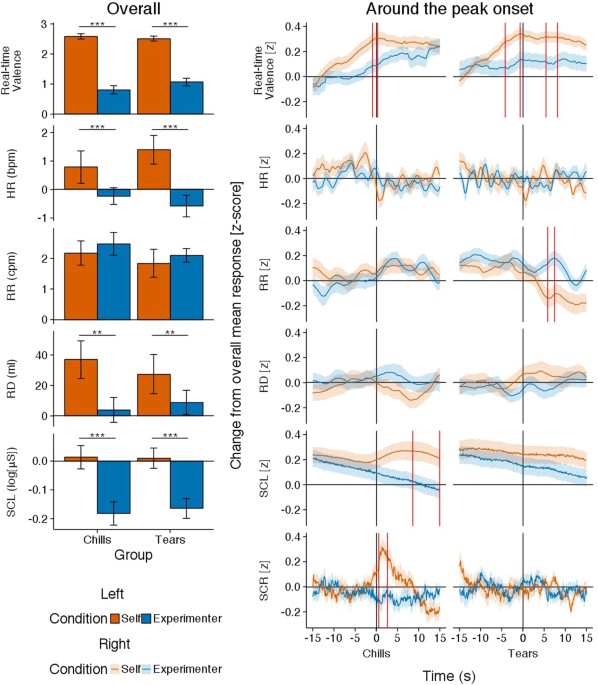
 Hussain-Abdulah Arjmand