
There’s plastic in your body. Do you know what it’s doing to you?

Plastic is one of the most amazing inventions of the last century. It’s cheap, it’s versatile, and it’s the reason our refrigerators fill up with leftovers we’ll never eat. Thanks to plastic, we can get anything we want, any time we want, and when we’re done with it, we can throw it out and forget about it. That’s why plastic is literally everywhere – in our consumer goods, in our construction materials, and in our internal organs. It’s a good thing we don’t yet understand the exact effects of that, right? As they say in espionage, what you don’t know can’t hurt you.
While plastic does many things very well, there are two things it does extremely well: It’s amazing at storing expired lo mein, and it’s even better at breaking off into microscopic shards at the slightest inconvenience. Applying a little heat or mechanical stress prompts it to shower the area in tiny white particles in exactly the same way it does to the scalp of a man in desperate need of dandruff shampoo. Any chunk of plastic smaller than 5 millimeters is a microplastic. Any microplastic fragment smaller than a nanometer is a nanoplastic. But honestly, most microplastics are not a huge concern. Any plastic larger than 150 nanometers that you ingest passes right through you. Aside from polluting our air, water, and earth in ludicrous quantities, these fragments don’t do much aside from just sitting there. And slowly degrading into nanoplastics, which are a much larger concern. All humor aside, though the study of nanoplastics and their effects on human bodies is in its infancy, there is a very large chance that our descendants will view plastic in the same way that we now view lead and asbestos. Yes, it’s that bad.
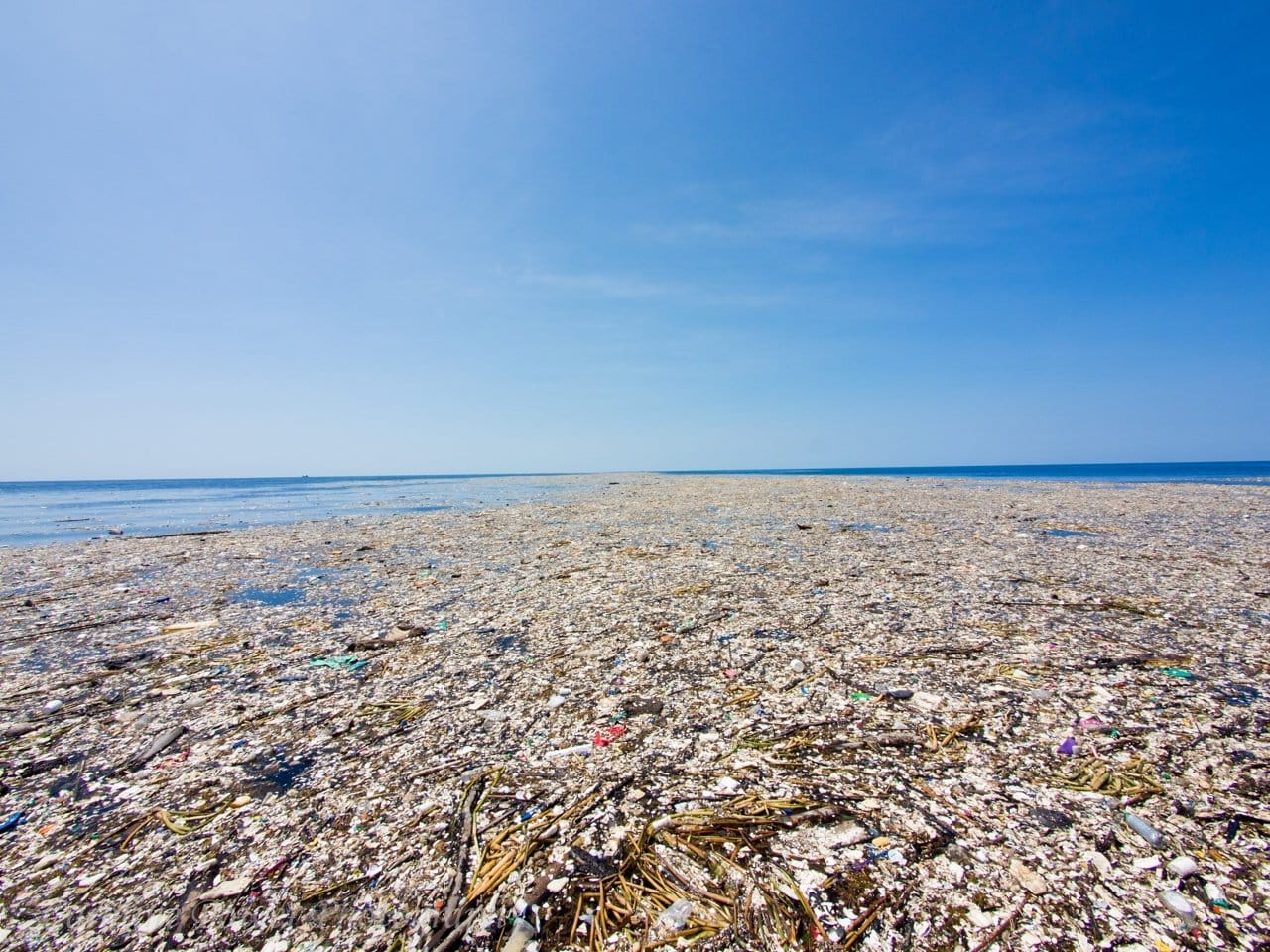
How much plastic is inside of us, and what is it doing in there? You may have seen the sensationalist pop-sci articles claiming that there’s enough plastic in our brains to make a credit card out of or to fill an entire teaspoon. Well, that’s accurate, not sensationalist. The average adult human brain contains enough plastic that 0.5% of its measured weight… is just plastic. The math adds up to the weight of a credit card. Very cool. You may have also seen the articles wildly claiming that there’s plastic in our intestines, colons, testicles, and breast milk. Instead of addressing this claim, I will simply remind you all that it is extremely important to verify your own sources and to not blindly follow along with attention-seeking clickbait websites such as those operated by the National Institute of Health’s Center for Biotechnology Information. Plastic is everywhere inside of us, and since no one’s yet tested the effects of long-term human internal exposure, we have the privilege of being the test subjects – again, just like our fathers before us were with lead and asbestos. Wow, we don’t have an amazing track record with consumer materials, do we?
We don’t fully know the effect of polluting our bodies this way, but we don’t know nothing, either. Some early problematic correlations and trends are already starting to emerge in the research, and we’ve learned enough about how plastic mechanically interacts with the microstructures of our bodies to speculate about what all this exposure is doing and how. Nanoplastic shards so small that they give bacteria body image issues frequently pass through, cut open, and wedge themselves into our cell membranes (the barriers between our cell interiors and the outside world). They poke holes in the lining between your bloodstream and your brain, they absorb antibiotics which renders them less effective at treating infections, and they REPEATEDLY STAB YOUR BONES AT A MICROSCOPIC LEVEL, GIVING YOU OSTEOPOROSIS. That’s just what we definitely know they do. Correlationally, we’ve seen links between plastic and IBS (people who have irritable bowels also have abnormally plastic-y poop), whole-body inflammation, respiratory illnesses, liver cirrhosis, poor prenatal development, alzheimers and other dementia types, bowel cancer, lung cancer, prostate cancer, brain cancer, breast cancer, ovarian cancer, liver cancer, and sickle-cell anemia. Sickle cell anemia can’t even be caused by plastic – it’s a genetic disorder and a lie I inserted into the list, but it seemed plausible, which is a sign of how bad things have gotten. Plastic is bad, and it shouldn’t be in our bodies. So if we can understand where it’s coming from and how to avoid it in our daily lives, we should be okay.
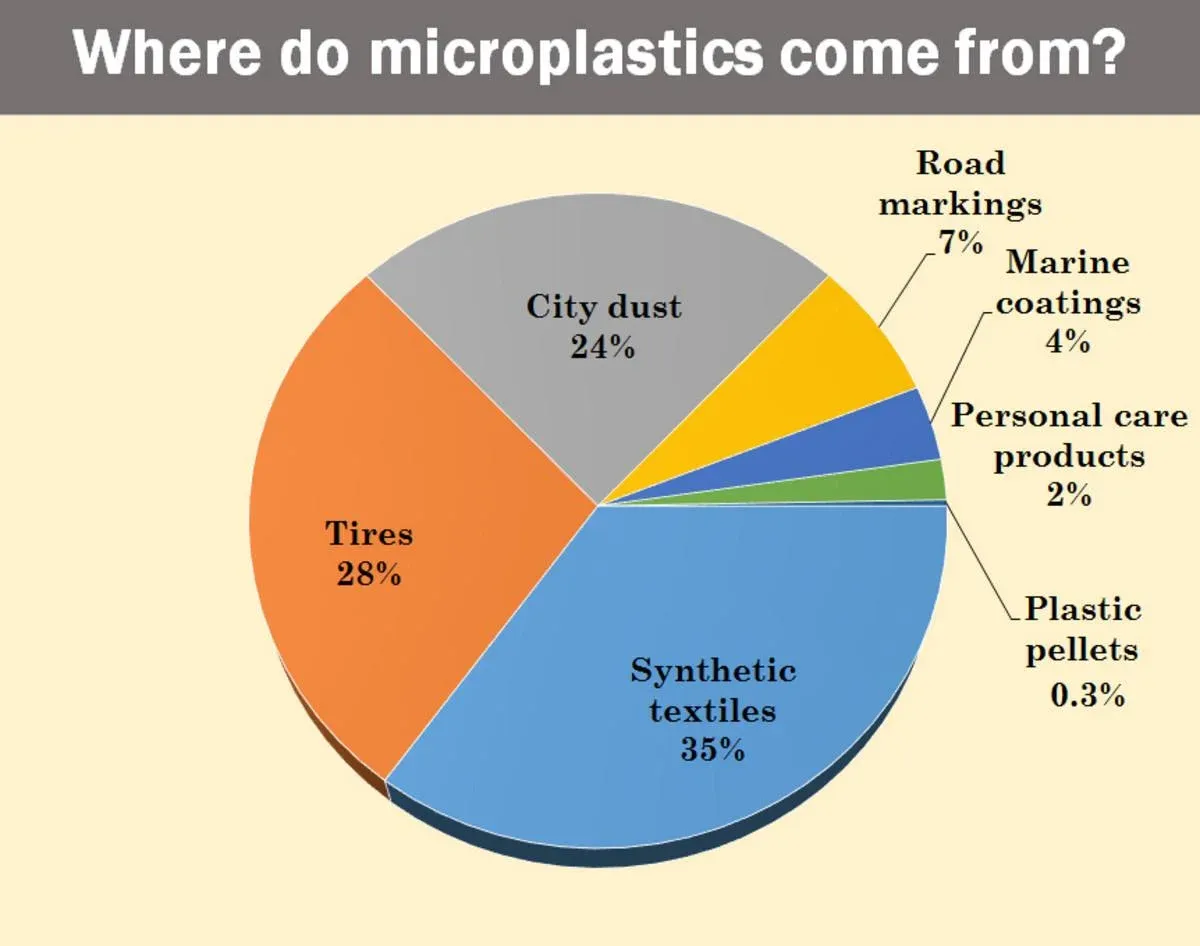
Studies have found that nanoplastic is in every breath of air we take, every piece of clothing we wear, and every single item of food and drink we consume (we love polluting our water with plastic, and that’s where all the fish live!). Since it’s in our water, it’s in all the plants and animals that drink our water, which means it’s also in all our food. One wash of a polyester piece of clothing releases 700,000 plastic nanofibers into the public water supply. If you loved the credit card analogy from earlier, you’ll love this one: that’s enough microfibers to knit a sweater for a very small, very contaminated mouse. Sorry - it’s hard to try to be funny when the situation is this bad. Dust used to mostly dead skin. Now it’s plastic that enters your lungs. Synthetic clothing is synthetic because it’s made of plastic. Most of our containers are made of plastic. Our industrial infrastructure is made of plastic. It’s everywhere. It’s unavoidable. The best we can honestly do is minimize how much of it gets into us.
Even though plastic exposure is unavoidable, there are steps you can take and lifestyle changes you can make to significantly reduce how much of it enters your body and reduce the risk of adverse plastic-related health effects.
- Control your water. Disposable water bottles are an enormous source of nanoplastics, mainly because they’re made by superheating plastic and then rapidly cooling them by filling them with water. Heat also leeches BPA out of the plastic and into your water. Use tap water and metal bottles instead. Use a water filter to remove microfibers from your drinking water.
- Don’t use plastic containers for your food, and NEVER MICROWAVE PLASTIC, even if it’s supposed to be “microwave safe.” Use glass, paper, and ceramic instead of plastic. It’s not as convenient, but there are alternatives to it. Heat also leeches BPA out of the plastic and into your food. Despite the fact that I’ve pointed out that BPA can be in both your food and water, BPA is not actually edible. Don’t eat it.
- Avoid red meat, fish, and highly processed foods. The higher up on the food chain an organism is, the more opportunity it has had to accumulate plastic. The fat content of red meat is excellent at retaining it. Fish are in the water. The water has more plastic than any other environment on earth. We found a bag of chips at the bottom of the Marianas Trench. There’s the caveat, of course, that fish is some of the healthiest meat you can eat. It’s a lose-lose. As for highly processed foods – don’t think for a second that plastic doesn’t get into the food during its industrial processing.
We are actively striving to learn more about how much plastic is in us, what it's doing in there, and how dangerous it is. However, we’re also pushing to develop new methods to remove it from the environment and our bodies, as well as to treat the problems it causes. Limit plastic ingestion wherever you can. Live your life to the best of your ability. We’ll be okay. We as a species will survive this, just as we made it through lead paint and asbestos insulation. Future humans are just going to think that we were a bit stupid for relying on plastic in literally every aspect of our lives. And we are – probably because we all have credit cards in our brains.1
FOOTNOTES
- That last comment was actually not about plastic. It was a tongue-in-cheek reference to postmodern consumerism. Please reorient your interpretation of the article’s final sentence appropriately. Thank you.
WORKS CONSULTED
https://iee.psu.edu/news/blog/microplastics-sources-health-risks-and-how-protect-yourself
https://pmc.ncbi.nlm.nih.gov/articles/PMC10072287/
https://www.reuters.com/graphics/ENVIRONMENT-PLASTIC/0100B4TF2MQ/
https://pmc.ncbi.nlm.nih.gov/articles/PMC11342020/
https://pirg.org/articles/new-research-finds-plastic-in-human-brains/
https://www.sciencenews.org/article/microplastics-human-bodies-health-risks
https://pubs.acs.org/doi/10.1021/acs.est.3c09524
https://www.ucsf.edu/news/2024/02/427161/how-to-limit-microplastics-dangers
https://pubs.acs.org/doi/10.1021/envhealth.3c00052
https://en.wikipedia.org/wiki/Microplastics_and_human_health